
Addicted to Busy: What’s Really Stopping Us from Slowing Down?
Do you ever feel like your body and mind can’t switch off, even when your to-do list is done?
You finally sit down with a book or cup of tea, but part of you is still ticking through tasks. Or you lie in bed exhausted, only to find your mind scanning for everything you “should” be doing tomorrow. Or you try to relax on the weekend, but a subtle guilt or unsettledness creeps in, as though slowing down might somehow undo all your progress.
For many of the people I work with, this “always on” mode doesn’t feel like a bad habit. It feels wired into them. Even when life is calmer, their body stays primed for movement, effort, or vigilance - as if rest isn’t safe or fully allowed.
The truth is, this isn’t about “not knowing how to relax”. It’s about how your nervous system and energy have been trained, often for years, to stay on high alert. The good news? You can teach your body to feel safe slowing down again. But it doesn’t start with forcing your mind to “be present”. It starts with balancing your energy, and rebuilding your Yin - the quieter, restorative side of your nervous system that allows true rest.
Why Slowing Down Feels So Unnatural (Even When You’re Tired)
Most people assume their inability to relax is just mental. They often say things like: “I need to stop overthinking.” “I should meditate more.” “I just can’t switch off.”

But what’s happening runs deeper. When your nervous system has been stuck in chronic low-level stress (often for years), slowing down doesn’t feel safe. Your body interprets stillness as a potential threat, because at some point, staying busy felt like the only way to stay safe, useful, or connected.
This could come from:
Growing up in a household where rest was seen as lazy while “helping” or “achieving” earned love and approval.
Years of a demanding career or caregiving role where being constantly “on” felt like survival.
Inherited or conditioned beliefs that your worth comes from doing, not being.
As trauma therapist Dr. Arielle Schwartz notes: “When the body learns that stillness equals danger - whether through trauma, chronic stress, or conditioning - slowing down can trigger anxiety. Healing happens through creating small, repeated experiences of safety in the body.”
The Real Costs of Being Always “On”
This constant alertness doesn’t just make it hard to rest - it impacts nearly every aspect of health and well-being.
Sleep disruption is one of the first casualties. Research published in Nature and Science of Sleep (2022) shows that chronic stress and nervous system hyperarousal contribute to difficulty falling and staying asleep, increasing risks for anxiety, depression, and even cardiovascular issues. When the body can’t downshift into restorative states, everything from hormone balance to cognitive function is affected.
Energy depletion is another. Your body is designed to oscillate between states of activity (Yang) and rest (Yin). Without adequate Yin - the receptive, restorative side - your system burns through reserves, leading to fatigue, mood swings, and brain fog. This isn’t just “mental burnout.” It’s physical depletion.
And perhaps most profoundly, you lose access to your deeper self. When you’re constantly busy or vigilant, the quieter guidance - your intuitive nudges, your emotional signals, your true desires - gets drowned out. You can’t hear yourself when your whole system is braced.
Why Qigong (and Yin Practices) Are So Effective
Most people try to fix this by willing themselves to “relax,” but the nervous system doesn’t respond to logic. It responds to experience - repeated signals that it’s safe to soften.
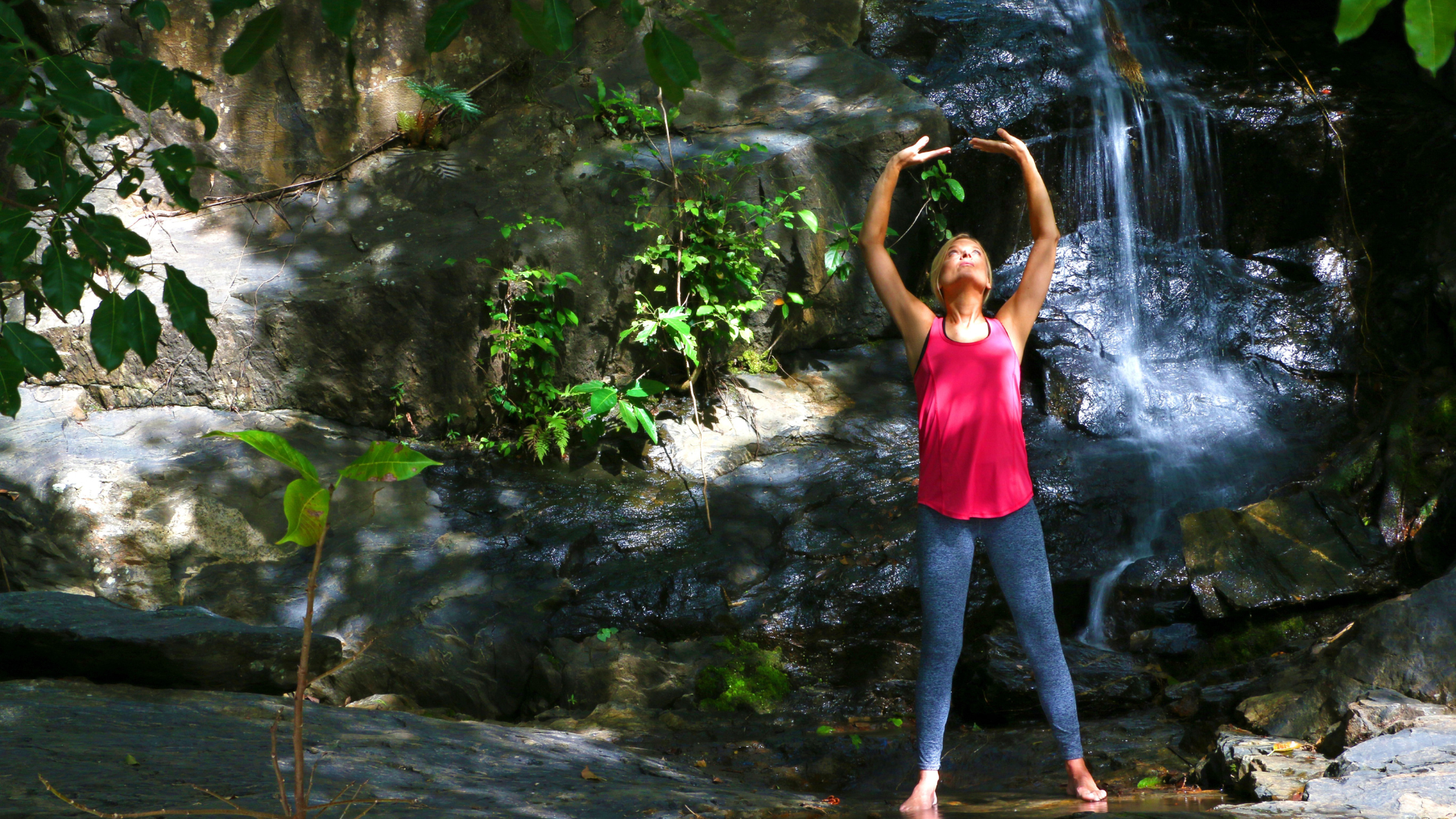
This is why Qigong, breathwork, and gentle Yin-focused practices are so effective. They create a physical and energetic experience of safety, rather than just telling you to “calm down.”
Qigong breathwork synchronises breath with flowing movement, stimulating the parasympathetic nervous system (the body’s natural “rest and digest” mode). A 2021 study in the Journal of Integrative and Complementary Medicine found that as little as 15 minutes of daily Qigong reduced cortisol levels (a stress hormone) and improved sleep quality in adults with mild insomnia.
Many Qigong forms intentionally strengthen Yin energy, using slower, grounded movements, deep diaphragmatic breathing, and gentle visualisations. Yin, in Chinese medicine, represents stillness, receptivity, and “being”, as opposed to Yang’s action, heat, and “doing.” Both are vital, but many of us live a predominantly “Yang lifestyle”, which drain our reserves.
Evening Qigong sequences that focus on Yin (such as ‘spinal cord breathing’ and ‘pulling down the heavens’) signal to your body that it’s time to wind down, helping you transition into deep, restorative sleep.
These aren’t just “relaxation techniques”. They are ways of retraining your body to find safety in stillness, so you can access true rest.
A Client’s Turning Point: From Wired to Rested
One of my clients, “Megan”, had spent two decades in a high-pressure corporate role. Even after leaving, she couldn’t relax - her body stayed wound tight, and she slept only in short, restless bursts.
We didn’t start by talking about sleep hygiene or mindset. Instead, we built a daily 15-minute Yin Qigong routine in the evenings: gentle spinal movements, slow breathing into her lower belly, and a simple visualisation to release all the hot “busy” energy as she exhaled.
We paired this with EFT/tapping sessions on points associated with calming the stress response (collarbone, under the eye, and side of hand) whenever her anxiety spiked during the day.
In her Soul-Sight Immersion, Megan uncovered a pattern of “proving worth through effort”- a belief she had repeated for years. Rather than blaming her past, she used this awareness to consciously choose a new pattern: creating value from a place of presence, not overdrive.
After four weeks, she reported something she hadn’t experienced in years:
“I actually feel rested. I can enjoy a quiet evening without feeling guilty. And ironically, I’m more productive - but it feels light, not frantic.”
The Science of Sleep (And Why It Matters for Energy)

Learning to rest isn’t just a luxury. Sleep and relaxation have profound, measurable impacts on health. Recent research (2021, Sleep Health Journal) found that adults who improved sleep quality reported a 30% decrease in perceived stress and anxiety levels and showed measurable improvements in immune function. Another 2022 meta-analysis in Frontiers in Psychology showed that mind-body practices like Qigong not only improve sleep quality but also significantly reduce symptoms of anxiety and depression.
For those of us who are “always on”, sleep and Yin practices aren’t indulgences - they’re medicine. They help restore the balance between Yang (doing) and Yin (being) so our systems can recharge.
How to Begin Rebuilding Yin and Slowing Down
If slowing down feels uncomfortable, start gently. Here’s a simple way to begin:
Set aside 10 minutes before bed. Try a Yin Qigong flow: slow shoulder rolls, gentle waves of the spine, and deep belly breathing. Visualise soft moonlight washing over your body with each exhale.
Use tapping to ease the transition. Tap gently on the collarbone or side of the hand while saying to yourself, “It’s safe for me to soften. It’s safe to rest.”
Create one “being” moment daily. Whether it’s sitting quietly with tea, lying on the floor, or watching the clouds, give yourself a few minutes where there’s no agenda - just you, your breath, and the moment.
Over time, these practices teach your nervous system and energy that slowing down isn’t a threat. It becomes a habit, not a fight.
Rest as the Gateway to Clarity
When you allow your Yin energy to be nourished - through sleep, Qigong, and gentle self-regulation - everything shifts:

Your mind feels clearer because it’s no longer racing.
Your emotions feel steadier.
Your body starts to heal and recharge instead of running on fumes.
Most importantly, you can hear yourself again - the inner guidance that only comes when the noise settles.
As David Hawkins, author of Letting Go, puts it: “True strength is revealed not in force, but in stillness. When we release the need to push, we discover a deeper power.”
Slowing down isn’t a sign of weakness or wasted time. It’s how your body, mind, and spirit reset - so you can show up with true clarity and energy when it’s time to act.
About the Author
Kerrie Womersley is the founder of Find Yourself Now and the author of Karma Is the Path. Her work explores conscious evolution, stabilised awakening, and the deeper patterns that shape our lives.
Through her writings, Qigong teaching and Soul-Sight work, she helps spiritually experienced adults stabilise who they truly are and live from their deeper truth.
If you would like a simple overview of the framework behind this work, you can download The Sacred Reclaim Map here.